Basic Income for You

Starting at one dollar per day for three months

Close-up of metal coins symbolizing direct cash transfers to families in poverty

Rural Basic Income for 700,000 People: South Korea Prepares Its Boldest Rollout Yet

South Korea is showing how quickly a basic income can grow from pilot to policy. The province-level city of Jeonnam-Gwangju has included the full 433.0 billion won needed for a rural basic income in its 2027 budget plan, enough to pay a monthly income to roughly 709,000 residents across all 16 of its counties officially designated as population-decline areas. Never before has a metropolitan government in South Korea budgeted a basic income for everyone in such areas within its jurisdiction.

How the program works

The national government covers 50% of the cost in pilot regions that pay 150,000 won (about $105) per month, with the city and local governments each covering another 25%. Four counties in Jeonnam-Gwangju are already running pilots, and twelve more have applied for next year’s call for projects. Residents in areas not selected as pilots will also receive a payment of about 75,000 won per month from the city itself starting in the second half of 2027.

Mayor Min Hyeong-bae told the city council that “the budget for the basic income was arranged to ensure stable lives for rural residents.” A city official added that it is significant even non-pilot areas are covered.

Why it matters

A tool against rural decline

Rural counties across the world are shrinking as young people leave. A guaranteed floor of income gives those who remain, often older residents and small farmers, the stability to stay, spend locally and keep village economies alive. That supports not only Sustainable Development Goal 1 (No Poverty) but also healthy rural communities that continue producing food.

A model others can copy

Other provinces have moved more cautiously, citing costs, which makes Jeonnam-Gwangju’s decision to leap ahead all the more striking. If the council approves the budget, an entire region’s countryside will have a predictable, unconditional income, real-world proof that basic income can be scaled from small pilots to whole territories.

Source: The Kyunghyang Shinmun Source: Seoul Economic Daily
Scenic rural village landscape with hills, a road and open sky, illustrating rural communities in developing countries

Can Cash Grow a Whole Economy? Malawi Is Testing It at Unprecedented Scale

One of the most exciting questions in the fight against global poverty is being answered right now in Malawi. GiveDirectly, the nonprofit that sends money directly to people living in poverty with no strings attached, is rolling out its largest program ever: by the end of 2026, around 120,000 households in two of Malawi’s poorest rural districts will receive a one-time, unconditional cash payment. In the areas receiving cash, the total transfer equals roughly 85% of local GDP.

Why this matters for the fight against poverty

The United Nations’ first Sustainable Development Goal calls on the world to “end poverty in all its forms everywhere”. We already know cash helps individual families: hundreds of studies show recipients earn more, eat better and own more assets. What the Malawi program tests is whether cash at large enough scale can lift an entire local economy, exactly what billions of people still living in poverty need most.

Earlier evidence from Kenya is encouraging

Research on a GiveDirectly program in Kenya found that each $1 transferred generated about $2.50 in local economic activity, as recipients’ spending flowed to neighbors and local businesses. Studies of smaller programs found very little inflation. In Kenya, GiveDirectly is also running the world’s longest basic income experiment, a 12-year study across roughly 200 villages, and the first years found no drop in total hours worked.

A hopeful signal

The Malawi program is anchored by a $100 million commitment from the Canva Foundation, showing that major philanthropy is betting on unconditional cash. Since 2009, GiveDirectly has delivered more than $1 billion to over 2 million people in countries including Malawi, Kenya, Rwanda and Uganda. Evidence like this brings a real basic income for the world’s poorest within reach.

Source: GiveDirectly via EIN Presswire, “GiveDirectly Tests Whether Cash Transfers Can Drive Economic Growth in Malawi”

Close-up of metal coins symbolizing direct cash transfers to families in poverty

Brazil Doubles Down on Cash: Bolsa Familia Gets a 15% Raise, and Marica Shows What Is Possible

Brazil, the country that wrote a basic income into law back in 2004, is showing again why it is a world leader in giving money directly to the poor. President Luiz Inácio Lula da Silva, re-elected in October, rolled out a 15% increase in the flagship Bolsa Família cash program ahead of his new term. From October, the minimum monthly benefit per family rose from 600 to 691 reais (about $117), with the average benefit climbing to 777 reais (about $132).

Why this matters for the fight against poverty

Cash programs like Bolsa Família are among the most effective weapons against poverty, the first of the UN Sustainable Development Goals. Brazil’s own experience proves it: since the program’s earliest days, direct transfers have helped millions of families afford food, school supplies and healthcare. Research consistently finds that families spend the money wisely, on exactly what their children need.

A Brazilian city already runs a true basic income

While Bolsa Família is targeted, the city of Maricá has gone further. Since 2013, its Renda Básica de Cidadania program has paid a monthly, unconditional basic income to tens of thousands of residents, making it the largest basic income program in Latin America according to the researchers evaluating it. It shows that unconditional cash can work as ongoing municipal policy in a developing country, not just a temporary pilot.

The bigger picture

Brazil’s story began with Senator Eduardo Suplicy, whose basic income law passed unanimously in 2004. Two decades later, cash transfers are so popular that expanding them helped decide a presidential election. When a developing country’s voters and leaders both embrace direct cash, the global movement toward ending poverty through basic income gains serious momentum.

Source: AP News, “Brazil’s Senate approves Lula’s $10 billion fiscal package after costly election spending”

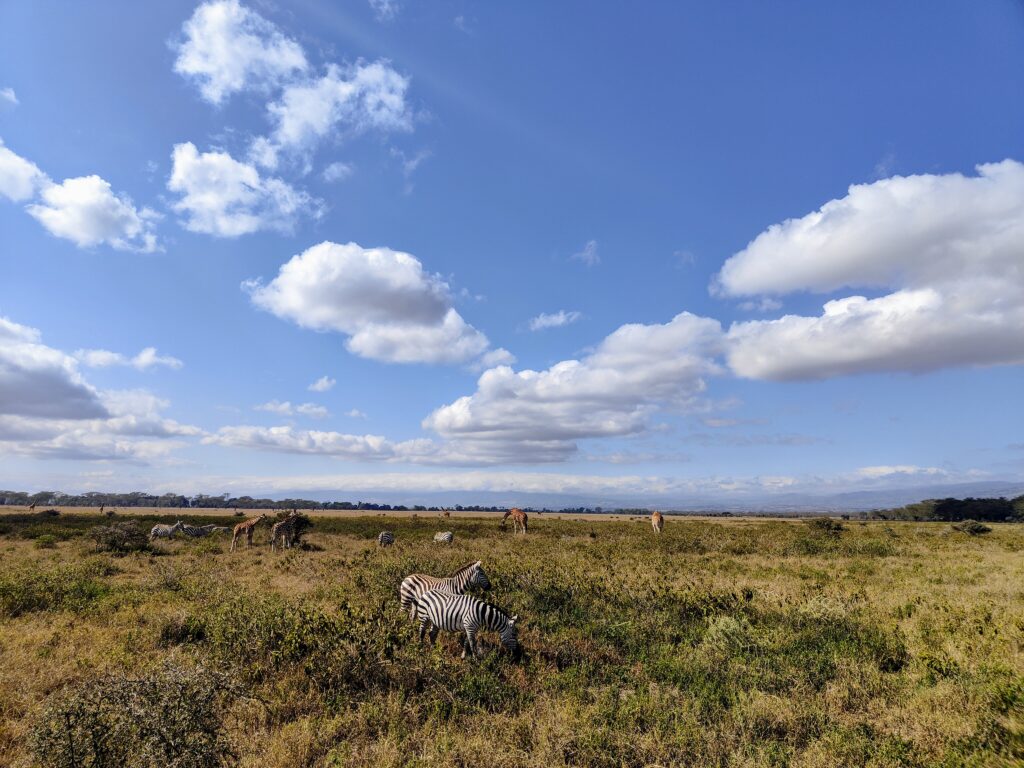
Vast open African landscape with zebras grazing under a wide sky, symbolizing the perspective and hope of the basic income movement in Africa

Namibia’s Omitara Remembers: The Village That Shows What Basic Income Changes

Not every basic income story is about a pilot that just launched. Sometimes the most powerful evidence comes from what people remember after a program ends. In Omitara, Namibia, nearly 17 years after the country’s pioneering Basic Income Grant (BIG) pilot concluded, residents still describe what a modest unconditional payment made possible.

From 2008, around 1,000 residents of Otjivero-Omitara received N$100 per person every month, with no conditions attached. It was not a fortune. But residents remember being able to afford food, send children to school with lunch, pay electricity bills and invest in small businesses. Some households bought building materials and improved their homes. Child malnutrition fell and school attendance rose during the pilot.

The lesson that matters for SDG 1

The United Nations’ first Sustainable Development Goal promises to end poverty everywhere. The Omitara experience shows how even a small, predictable, unconditional payment transforms daily life for families outside the formal economy. As a recent report in The Namibian describes, that breathing space largely disappeared when the grant ended, and the national rollout that was once envisioned never happened.

Why pilots must become policy

Namibia has since introduced a Conditional Basic Income Grant of N$600 per month for some extremely poor households, though residents say it has not reached them. The movement’s clearest lesson: pilots should be pathways to lasting policy, not temporary demonstrations.

A hopeful takeaway

Across Africa, where millions remain outside formal employment, Omitara is proof that basic income works, and that the task now is to make it permanent. The memories of Omitara are not nostalgia; they are a blueprint.

Source: Basic Income Earth Network, “Namibia’s Omitara: What Happens When Basic Income Disappears?”

Landscape street scene from Abuja, Nigeria

A Bank Account for Every Beneficiary: Nigeria Pushes to Reach 24,000 More People with Cash Grants

Sometimes the biggest obstacle between poor families and the cash support they are entitled to is simply a missing bank account. This week, Nigeria showed how that obstacle can be removed at speed.

24,000 Residents Ready to Receive Their Grant

On November 19, 2026, Moniepoint Microfinance Bank announced a partnership with the Akwa Ibom State Ministry of Humanitarian Affairs to enroll about 24,000 residents who have not yet been able to access the Federal Government’s ₦50,000 intervention grant, an unconditional cash program aimed at the country’s most vulnerable households.

The beneficiaries, drawn from the National Social Register, only lack one thing: a bank account. Moniepoint says it can register up to 2,500 people per day, using its presence in all 31 local government areas of Akwa Ibom.

Cash Delivery as Poverty Relief

The effort is a vivid reminder of a truth often overlooked in debates about basic income and cash transfers: delivering money to the poor is a practical challenge that can be solved. Community facilitators will verify beneficiaries, registration centers will be set up locally, and residents will be warned about fraudsters exploiting the program.

Importantly, the new accounts will keep serving their owners beyond this single grant: they open the door to future federal and state social programs, building a durable channel for direct support.

Nigeria’s ₦50,000 grant program is part of a wider wave of cash transfers rolling out across the country’s states. For families living on the edge, an unconditional payment like this can cover food, medicine, school costs, or a small investment in a livelihood.

Every account opened in Akwa Ibom this month is a direct, practical step toward the goal the whole basic income movement shares: getting money into the hands of people who need it most, without conditions or humiliation.

Source: THEWILL, “Moniepoint Moves To Enrol 24,000 Akwa Ibom Residents For FG’s ₦50,000 Grant”

Source: Legit.ng, “FG’s N50,000 Grant: Lists of Governors Currently Doing Cash Transfer to People”

An artist’s easel with a blank canvas standing in a green landscape

Malta’s Artists’ Basic Income Plan Gains Political Backing – and a Clear Vision

A small European country is quietly moving the basic income conversation forward, and artists are at the center of it.

Basic Income for the Arts, Made in Malta

Malta’s Entertainment Industry and Arts Association (MEIA) this week clarified its proposal for a Basic Income for the Arts, after opposition leader Alex Borg told a political event that his party supports “a basic salary for our country’s artists”. MEIA stressed that the initiative is a time-limited pilot rather than a permanent state salary, and noted that the concept has been part of its national budget submissions for two consecutive years.

A Safety Net for Creative Work

MEIA describes the proposal as a targeted mechanism to create financial stability, helping creative professionals sustain their practice, produce more work, and contribute more effectively to the economy. It pointed to the structural nature of artistic work, where irregular income often forces talented people to abandon their craft.

The association was clear about what the idea is not: “It is not about paying artists to do nothing,” MEIA explained, but about giving creative professionals a stable floor to build on.

Malta is not alone in recognizing this problem. Ireland launched its own Basic Income for Artists pilot in 2022, one of the first nationwide schemes of its kind, and the positive experience there has inspired similar conversations across Europe.

For the basic income movement, Malta’s story is an encouraging example of how targeted pilots can bring the idea of unconditional income into the political mainstream, one profession at a time, while building the evidence that security fuels creativity rather than dulling it.

Source: Newsbook Malta, “MEIA stresses artists’ basic income proposal is a pilot, not a permanent salary”

Traditional bamboo, cane, and wicker baskets stacked at an outdoor market.

Sri Lanka Raises Cash Grants for Its Poorest Families to Rs. 200,000

Sri Lanka is turning direct cash into a bigger ladder out of poverty. The Cabinet of Ministers has approved raising the maximum capital grant for eligible Aswesuma beneficiary families from Rs. 150,000 to Rs. 200,000 under the World Bank-funded Social Protection Project, and expanding the program from 10,975 to 11,500 families.

From welfare to economic empowerment

The grants go to families classified as poor or extremely poor under the Aswesuma welfare scheme, Sri Lanka’s main targeted social safety net. The idea is simple and powerful: instead of only covering short-term needs, a one-off capital grant gives a household the means to invest in a livelihood, such as equipment, livestock or a small business.

Building on proven results

The decision follows the World Bank’s own agreement to increase both the grant and the number of beneficiaries, based on the experience of the first phase. Under that phase, capital grants have already reached 4,900 families across seven districts. The second phase is expected to assist 6,600 families across five districts.

A wider movement

Sri Lanka’s cash-first approach does not stand alone. A parallel program funded by the Asian Development Bank has already completed grants to 8,660 families. Together these initiatives show how international development partners and governments are converging on the same answer to poverty: give families money and trust them to use it well.

Why this matters for basic income

Direct cash transfers are the building block of any basic income system. Every program like Aswesuma adds to the global evidence base that cash reduces hardship without creating dependency. It is a practical step toward Sustainable Development Goal 1, No Poverty, and proof that even in difficult economic times, countries can choose to invest in their poorest citizens rather than withdraw from them.

Source: Newswire Source: Ada Derana

A new raffle from UBI4ALL

The UBI4You project is inspired by initiatives such as UBI4ALL. We are pleased to announce that a new raffle from them is coming up on August 22. To take part in that raffle, you need to register on their website. This is a real opportunity to experience what Unconditional Basic Income can mean in everyday life.

UBI4ALL is a global initiative working to make basic income tangible and accessible. By organizing recurring raffles, they enable people around the world to receive a guaranteed monthly income for one to five years, depending on their country. Their approach is simple but powerful: instead of only talking about UBI, they put it into practice—creating real stories, real impact, and growing momentum for systemic change.

Round one starts with five participants

The first round of our basic income project launches with five participants from four different countries. Selected at random from our full pool of sign-ups, these five individuals will each receive a small daily basic income of 9,000 GoodDollars — equivalent to approximately one U.S. dollar per day — streamed directly to their GoodWallet over a period of three months.

Below, the participants introduce themselves.

Daniel Ablohr, Kasoah, Ghana

I am a married family man with a wife and three children—two girls and a boy. I have been a professional teacher for the past 25 years, with experience across three levels within the Ghana Education Service. I currently teach Government at Bawjiase Senior High School in the Central Region of Ghana.

I plan to use the GoodDollar funds to strengthen my teaching practice by acquiring learning resources that will make the study of Government more engaging, relatable, and meaningful for my students. I also intend to develop a community-based learning platform where students can continue accessing educational resources and interacting with learning materials beyond the classroom.

In addition, I serve as my school’s Professional Learning Community (PLC) coordinator. With this support, I hope to help build digital platforms where fellow teachers can access and share teaching resources to improve our collective practice.

Clinton Chima, Port Harcourt, Rivers State, Nigeria

I come from a family that supports each other. Growing up, I learned the importance of hard work and education. I recently graduated and am now looking for opportunities to start working and build a stable life.

I am currently in the transition from school to work and trying to find a job where I can gain experience and support myself. I also want to be able to help my family in the future.

I plan to use GoodDollar funds to support myself during this period. The money will go toward basic needs like food, transportation for job applications, and internet access. I also want to use some of it for courses or training to improve my chances of finding a job.

Jose Zambrano, Caracas, Venezuela

I am married and have four children. I work as a driver to support my family.

I do not own a vehicle right now, which makes it harder to earn a steady income. I am saving to buy my own vehicle and plan to use GoodDollar to help with that.

Having a car would help me find more work and earn more money. It would also make it easier to support my family.

Sobuz Molla, Daka Magura, Bangladesh

I come from a modest family with my parents and siblings. I am currently a student and continuing my education, focusing on improving my knowledge and skills for the future.

Right now, I am not working full-time because I am focusing on my studies. I am trying to prepare myself for future opportunities.

I plan to use GoodDollar funds for my daily needs, such as food, transportation, and other basic expenses. I will try to save some for emergencies. I also want to use part of it for my education and to improve my skills.

Murcaling Sek, Cumillah, Bangladesh

I come from a low-income family in Bangladesh. My family works hard to cover our basic needs. I am currently a student and focused on continuing my education. I also try to help my family when I can and spend time learning useful skills.

My goal is to become financially stable, support my family, and improve my situation over time. Any support I receive will help me continue my studies and manage daily challenges.

I plan to use GoodDollar for basic expenses such as food, personal needs, and some education-related costs. It will also help reduce pressure on my family. I will try to use the funds carefully and save a small portion if possible.